
How to Choose the Right Commercial Coffee Machine for Your Business
Choosing the right commercial coffee machine can make a major difference to the quality, consistency and profitability of your coffee offer. Whether you run a café, hotel, restaurant, convenience store, workplace, bar or contract catering operation, the right equipment will help you serve great coffee efficiently, reliably and at the pace your business demands.
But with so many commercial coffee machines available in the UK, knowing where to start can be difficult. Do you need a traditional espresso machine, a bean-to-cup coffee machine or a bulk brew solution? Should you buy outright or lease? How much capacity do you need? And what about grinders, water filtration, staff training and aftercare?
This commercial coffee machine buying guide explains the key things to consider before investing in a professional coffee machine for your business.
What type of commercial coffee machine do you need?
The first decision is choosing the right style of machine for your operation. The best option depends on your customer expectations, staff skill level, service style, available space and daily coffee volume.
Traditional espresso machines
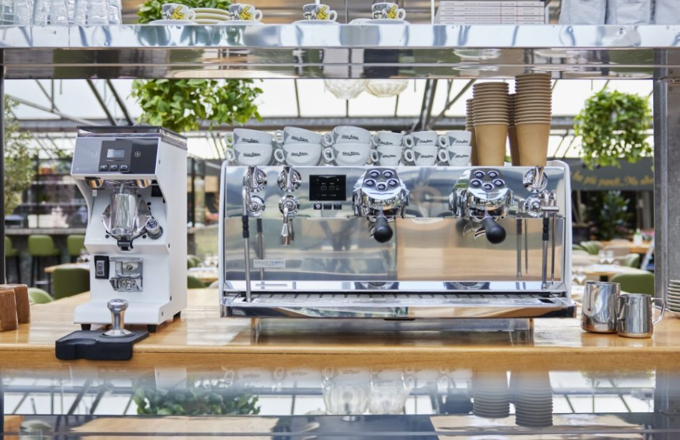
A traditional espresso machine is the classic choice for cafés, coffee shops, restaurants, hotels and premium hospitality venues where coffee quality, presentation and customer experience are key.
These machines are designed to produce high-quality espresso-based drinks such as flat whites, cappuccinos, lattes, americanos and macchiatos. They also create a more theatre-led coffee experience, with visible preparation, skilled baristas and a premium feel at the point of service.
Traditional espresso machines are ideal for businesses that want to build a strong coffee reputation or offer a more artisan-style drinks menu.
Best suited to:
- Cafés and coffee shops
- Restaurants
- Hotels
- Bars
- Premium hospitality venues
- Food halls and delis
- High-quality workplace cafés
Key benefits:
- Excellent drink quality
- Premium customer experience
- Greater control over espresso and milk texture
- Strong visual appeal
- Ideal for skilled barista service
- Flexible drinks menu
Things to consider:
Traditional espresso machines require trained staff, a suitable grinder, good workflow and regular cleaning. If your team is inexperienced, you may need training and support to ensure consistent drink quality.
Bean-to-cup coffee machines
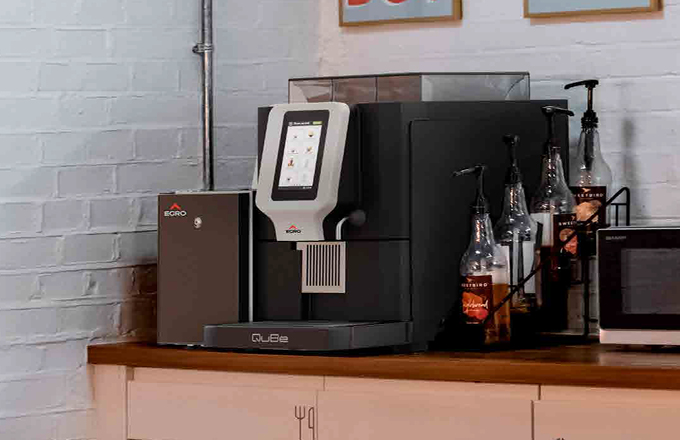
A bean-to-cup coffee machine is a practical choice for businesses that want to serve fresh coffee with minimal training and maximum consistency.
These machines grind whole beans, brew coffee and often prepare milk-based drinks at the touch of a button. They are ideal where speed, simplicity and repeatability are important, especially in self-service or low-staff environments.
A commercial bean-to-cup coffee machine can be a strong option for businesses that want to add a quality coffee offer without needing a dedicated barista.
Best suited to:
- Offices and workplaces
- Hotels
- Convenience stores
- Quick-service restaurants
- Breakfast areas
- Contract catering sites
- Education and healthcare environments
- Self-service areas
Key benefits:
- Simple operation
- Consistent drinks
- Reduced staff training
- Fast service
- Suitable for self-service
- Compact and efficient
- Ideal for multi-site consistency
Things to consider:
Bean-to-cup machines vary significantly in output, milk system, cleaning requirements and drink quality. It is important to choose a commercial model designed for your expected volume, rather than relying on domestic or light-use equipment.
Bulk brew coffee systems
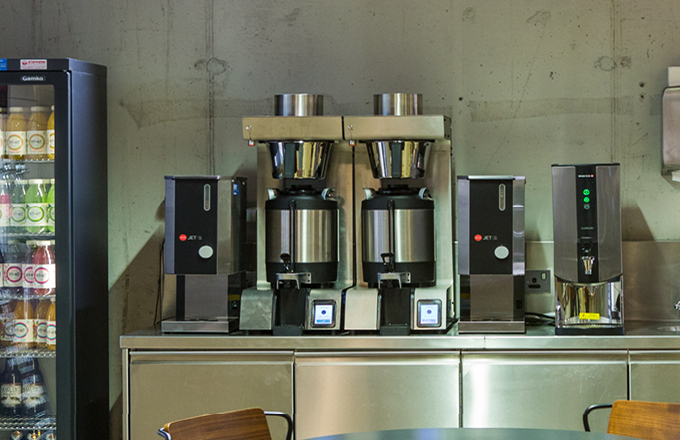
Bulk brew coffee systems are designed to produce larger volumes of filter coffee quickly and consistently. They are a strong option for businesses that need to serve many people in a short time.
Rather than preparing each drink individually, bulk brew systems allow you to prepare coffee in batches and hold it ready for service. This makes them especially useful for breakfast service, events, conference catering and high-volume hospitality environments.
Best suited to:
- Hotels
- Conference centres
- Contract caterers
- Universities and colleges
- Breakfast buffets
- Event venues
- Large workplace catering areas
Key benefits:
- High-volume coffee production
- Fast service during peak periods
- Consistent batch quality
- Ideal for events and breakfast service
- Reduces queues
- Works well alongside espresso or bean-to-cup systems
Things to consider:
Bulk brew is not always the right solution for premium espresso-based drinks. Many businesses use it alongside a traditional espresso or bean-to-cup machine to cover different service areas.
How many cups per day do you need?
Daily volume is one of the most important factors when choosing a commercial coffee machine. A machine that is too small may struggle during busy periods, while an oversized machine may cost more than your business needs.
As a general guide:
| Cups per day | Suggested coffee setup | Typical business type |
|---|---|---|
| 20–50 cups | Compact bean-to-cup or 1-group espresso machine | Small cafés, delis, farm shops, bars, offices |
| 50–100 cups | Higher-output bean-to-cup or 1/2-group espresso machine | Cafés, pubs, restaurants, hotels |
| 100–200 cups | 2-group espresso, premium bean-to-cup or multiple machines | Busy cafés, hotels, QSR, contract catering |
| 200+ cups | High-volume espresso, bulk brew or multi-machine setup | Large hotels, universities, events, high-footfall sites |

When estimating volume, consider more than average daily sales. Think about your busiest trading periods, morning peaks, breakfast rushes, lunchtime queues, event days and seasonal demand.
A professional coffee machine should be able to cope comfortably with your peak periods, not just your quietest days.
Staff skill level and training
The right coffee machine should match the skills and structure of your team.
A traditional espresso setup can produce outstanding results, but it relies on trained staff who understand dosing, tamping, extraction, milk steaming and cleaning. With the right training, this can be a major advantage and can help your business stand out.
Bean-to-cup machines are better suited to environments where staff turnover is high, training time is limited or coffee needs to be served consistently by different team members. They are also ideal where the customer may operate the machine themselves.
Bulk brew systems are generally straightforward to operate but still require correct brewing processes, cleaning and coffee storage to maintain quality.
Before choosing a machine, ask:
- Who will be making the coffee?
- How much training can you realistically provide?
- Will the same people use the machine every day?
- Do you need skilled barista theatre or push-button consistency?
- How important is speed during peak periods?
Barista Tech can help you choose a coffee machine that fits your team, your service style and your business goals.
Self-service vs served coffee
Another important decision is whether your coffee will be served by staff or operated by customers.
Served coffee
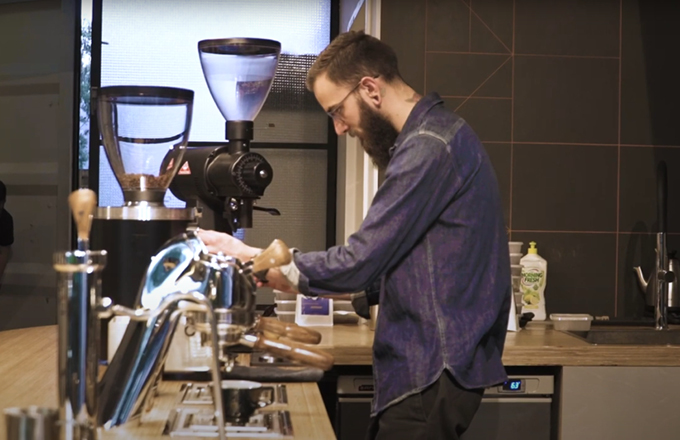
Served coffee is ideal when you want to create a premium customer experience. It works particularly well in cafés, restaurants, hotels, bars and hospitality venues where presentation and service matter.
Traditional espresso machines are often the best fit for served coffee, especially when paired with a high-quality grinder and trained staff.
Self-service coffee
Self-service coffee is ideal for workplaces, convenience stores, hotels, breakfast areas, education, healthcare and contract catering environments.
Bean-to-cup machines are usually the best choice for self-service because they allow customers to select drinks quickly and easily with minimal staff involvement.
When planning a self-service coffee area, consider:
- Ease of use
- Drink menu simplicity
- Cup storage
- Milk options
- Cleaning routines
- Payment or honesty systems
- Queue management
- Signage and customer instructions
A good self-service setup should be simple, reliable and easy for customers to understand.
Fresh milk vs powdered milk
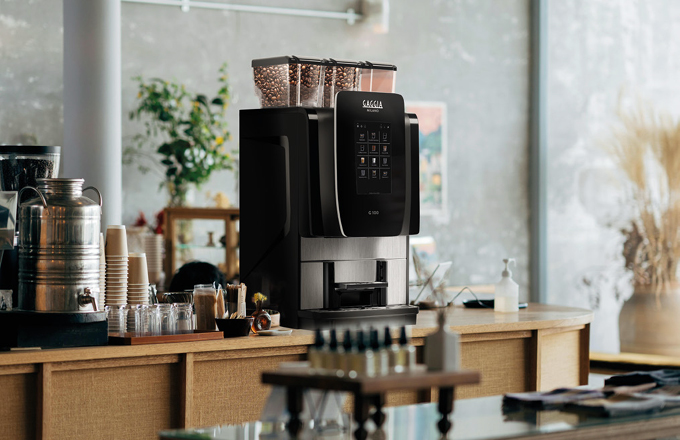
If you are choosing a bean-to-cup coffee machine, one of the key decisions is whether to use fresh milk or powdered milk.
Fresh milk systems
Fresh milk systems usually offer a more premium drink quality and are often preferred where taste and texture are priorities. They are ideal for businesses that want to serve high-quality cappuccinos, lattes and flat whites.
Benefits of fresh milk:
- Better taste and texture
- More premium customer perception
- Suitable for higher-quality coffee menus
- Ideal for hospitality and workplace environments
Considerations:
Fresh milk systems usually require more careful cleaning and milk storage. They may also need refrigeration close to the machine.
Powdered milk systems
Powdered milk systems can be useful in high-volume or lower-maintenance environments where simplicity, long shelf life and reduced refrigeration needs are important.
Benefits of powdered milk:
- Easy storage
- Reduced milk wastage
- Simple operation
- Useful in some self-service environments
- Lower handling requirements
Considerations:
Powdered milk may not deliver the same taste or texture as fresh milk. It may be suitable for some operations, but not for every brand or customer expectation.
The right choice depends on your site, your customers and the quality of drink you want to serve.
Space, plumbing and power requirements
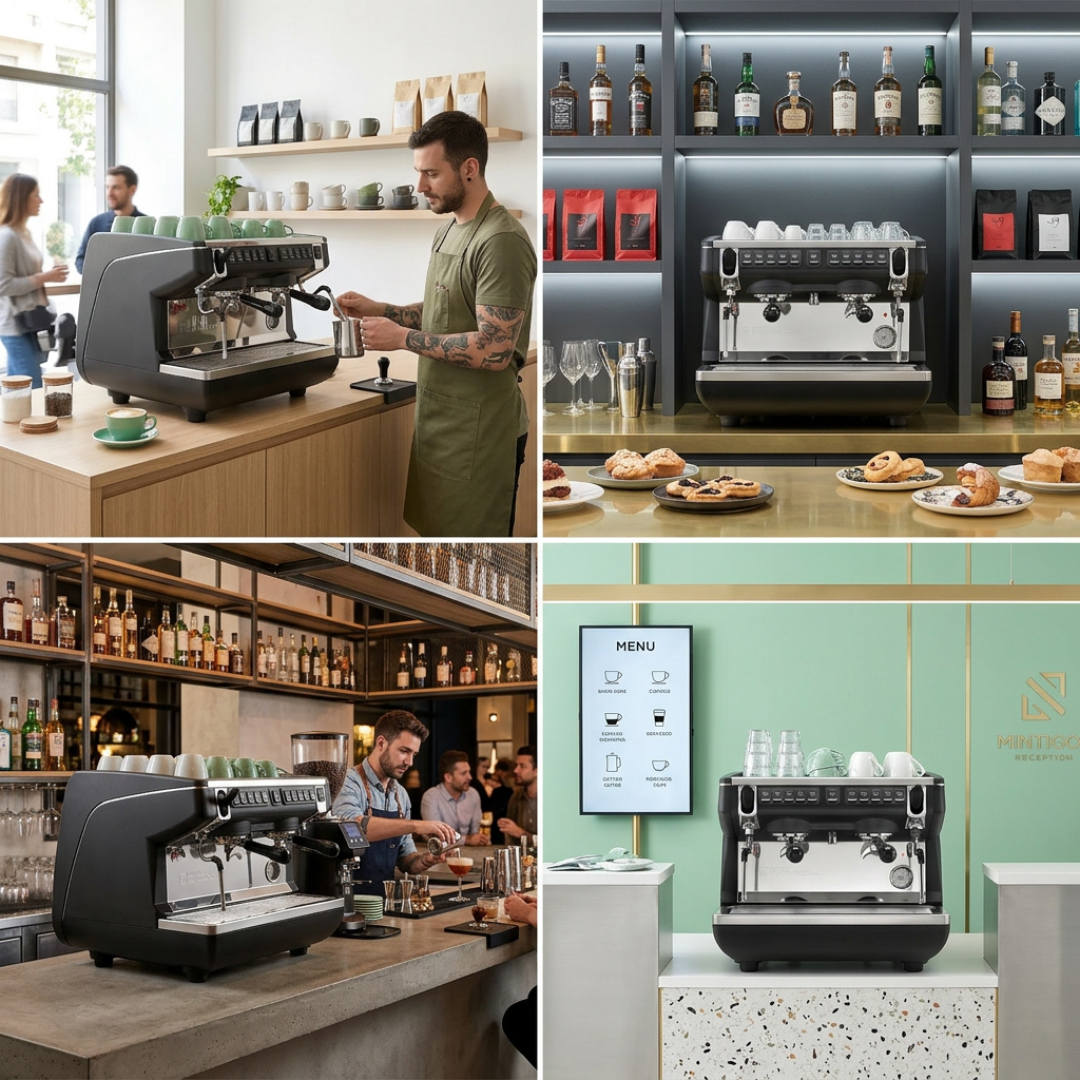
Before choosing a commercial coffee machine, it is essential to understand the practical requirements of your site.
A professional coffee machine needs to fit into your workflow, not just onto the counter.
Consider:
- Counter space
- Machine width, depth and height
- Space for a grinder
- Cup storage
- Knock box or waste drawer
- Milk fridge
- Water filtration
- Access for cleaning
- Nearby power supply
- Drainage requirements
- Plumbing access
- Customer flow and queue space
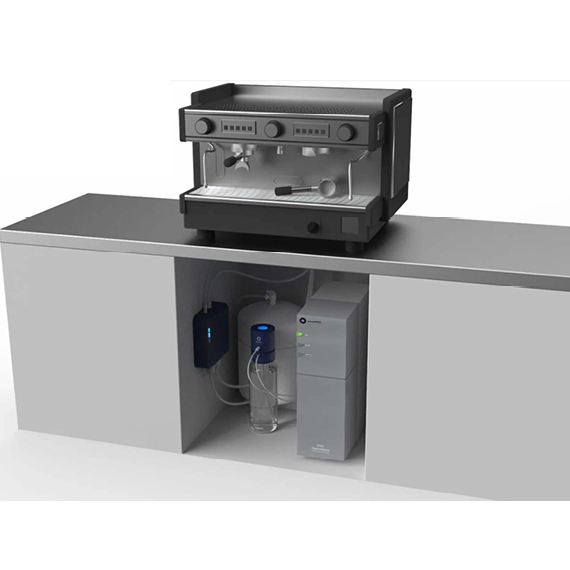
Some machines need to be plumbed into a mains water supply, while others may offer manual-fill options. Higher-output commercial machines may also have specific power requirements.
It is always worth checking installation requirements early, especially if you are opening a new site, refurbishing an existing space or planning a multi-site rollout.
Grinder considerations
If you choose a traditional espresso machine, the grinder is just as important as the coffee machine itself.
A high-quality commercial grinder helps deliver consistent extraction, better flavour and smoother workflow. Poor grind quality can lead to inconsistent coffee, slow service and wasted beans.
When choosing a grinder, consider:
- Daily coffee volume
- Grind consistency
- Speed of service
- On-demand grinding
- Dose accuracy
- Ease of adjustment
- Cleaning requirements
- Decaf or second coffee options
- Available counter space
For premium espresso service, investing in the right grinder is essential. A strong espresso machine cannot perform at its best without consistent grinding.

Water filtration considerations
Water quality has a major impact on coffee taste, machine performance and long-term reliability.
Poor water quality can affect flavour, aroma, crema and consistency. It can also contribute to limescale build-up, which may increase the risk of breakdowns and reduce machine efficiency.
A suitable commercial water filtration system can help:
- Improve coffee flavour
- Protect the machine
- Reduce limescale build-up
- Support consistent drinks
- Improve equipment reliability
- Reduce avoidable service issues
Water requirements vary by location, so it is important to choose a filtration solution that suits your site and equipment.
Barista Tech can advise on water filtration as part of a complete commercial coffee setup.
Leasing vs buying a commercial coffee machine
When investing in a commercial coffee machine, you will usually need to decide whether to buy the equipment outright or lease it over a fixed period.
Buying outright
Buying outright can be a good option if you have available capital and want to own the equipment from day one. It may reduce long-term finance costs and can be suitable for established businesses with clear equipment plans.
Benefits of buying:
- Full ownership
- No monthly finance payments
- Potentially lower total cost over time
- Simple asset management
Considerations:
The upfront cost can be significant, especially when factoring in the machine, grinder, water filtration, accessories and installation.
Leasing
Leasing can make it easier to access professional coffee equipment without a large upfront investment. It allows businesses to spread the cost over time and preserve cash flow.
Benefits of leasing:
- Lower upfront cost
- Predictable monthly payments
- Easier budgeting
- Access to higher-quality equipment
- Useful for new sites and growing businesses
Considerations:
Finance agreements are usually subject to approval, and the total cost may be higher than buying outright. It is important to understand the terms before committing.
For many businesses, leasing a commercial coffee machine can make it easier to launch or upgrade a coffee offer while keeping capital available for other areas of the operation.
Service, warranty and preventative maintenance
A commercial coffee machine is a working asset. It needs to be reliable, clean and properly maintained.
When choosing a coffee machine for your business, do not focus only on the purchase price. Consider the support that comes with it.
Look for:
- Professional installation
- Staff training
- Warranty support
- Access to engineers
- Preventative maintenance options
- Cleaning guidance
- Spare parts availability
- Water filtration advice
- Ongoing technical support
Downtime can be costly, especially if coffee is an important part of your daily revenue. A reliable service partner can help protect your investment and keep your business serving.
What is the best commercial coffee machine for your business?
There is no single best commercial coffee machine for every business. The right choice depends on your site, your customers, your team and your goals.
Before choosing a machine, ask yourself:
- How many coffees do we expect to serve each day?
- What are our busiest periods?
- Do we need barista-quality espresso or simple push-button service?
- Will staff or customers operate the machine?
- Do we have space for the machine, grinder and accessories?
- Do we need fresh milk, powdered milk or both?
- Is the site plumbed for water?
- Do we need water filtration?
- Would leasing or buying work better for our budget?
- What service and maintenance support do we need?
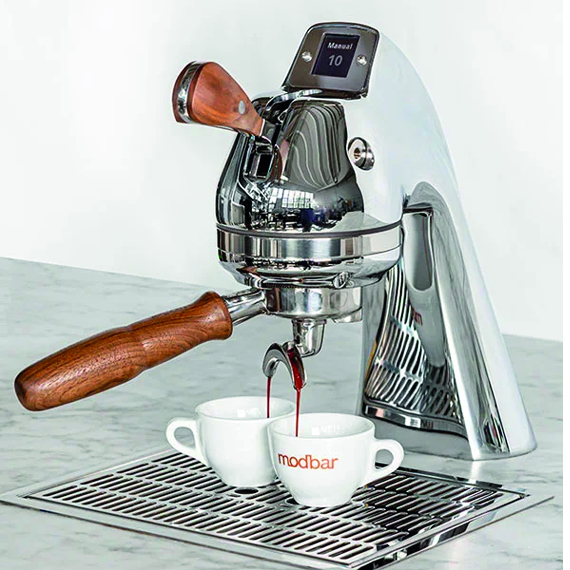
A professional coffee machine should do more than make coffee. It should support your workflow, protect drink quality, improve customer experience and help your business generate revenue.
Speak to Barista Tech for help choosing the right commercial coffee setup
If you are looking for a commercial coffee machine for your business, Barista Tech can help you choose the right solution.
From traditional espresso machines and commercial bean-to-cup coffee machines to grinders, bulk brew systems, water filtration, coffee beans, training and aftercare, we can help you build a coffee setup that works for your site, your team and your customers.
Speak to Barista Tech for help choosing the right commercial coffee setup – give us a call on 01473 350046 or email enquiries@baristatech.co.uk
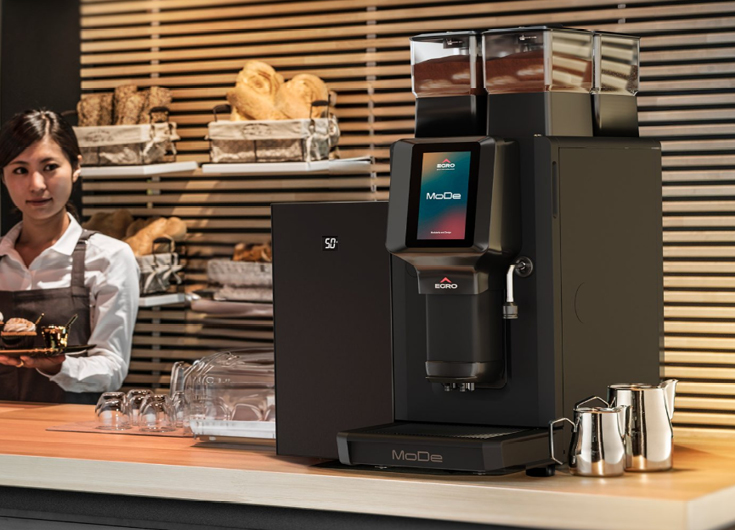
Fully automatic coffee machines, perfect for both barista or self-service.
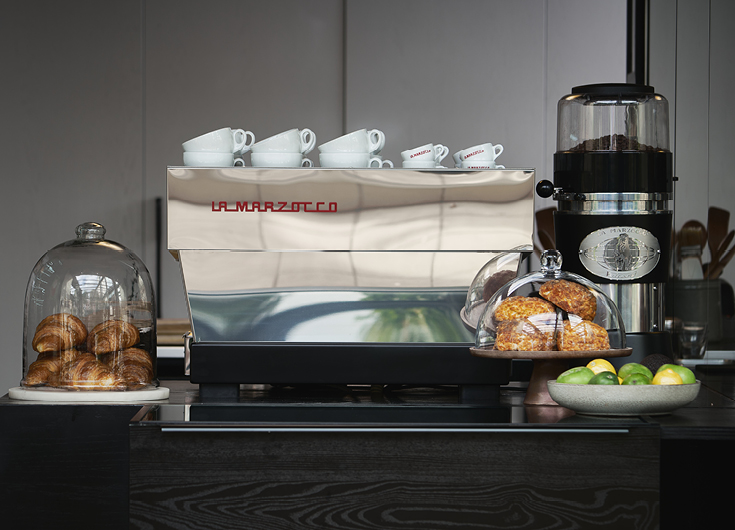
La Marzocco builds relationships to enrich the lives of others.
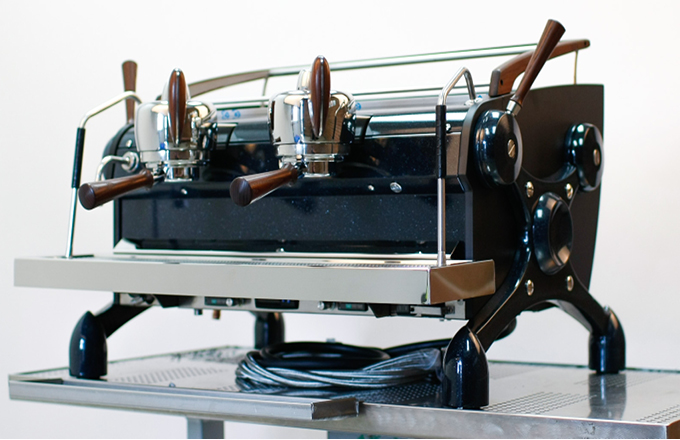

Slayer Espresso – The ultimate Barista’s tool
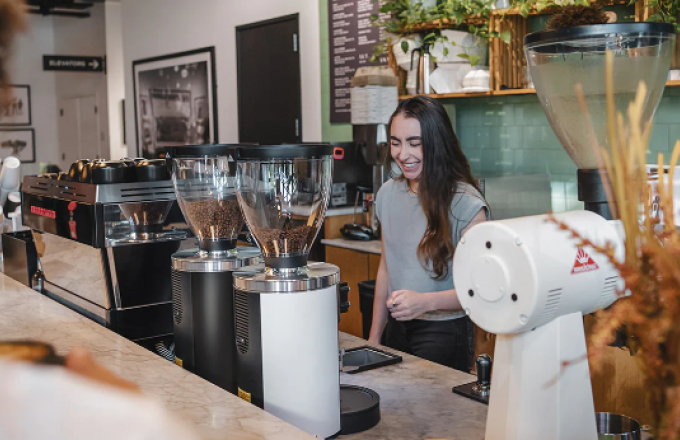

Mahlkonig professional coffee grinders
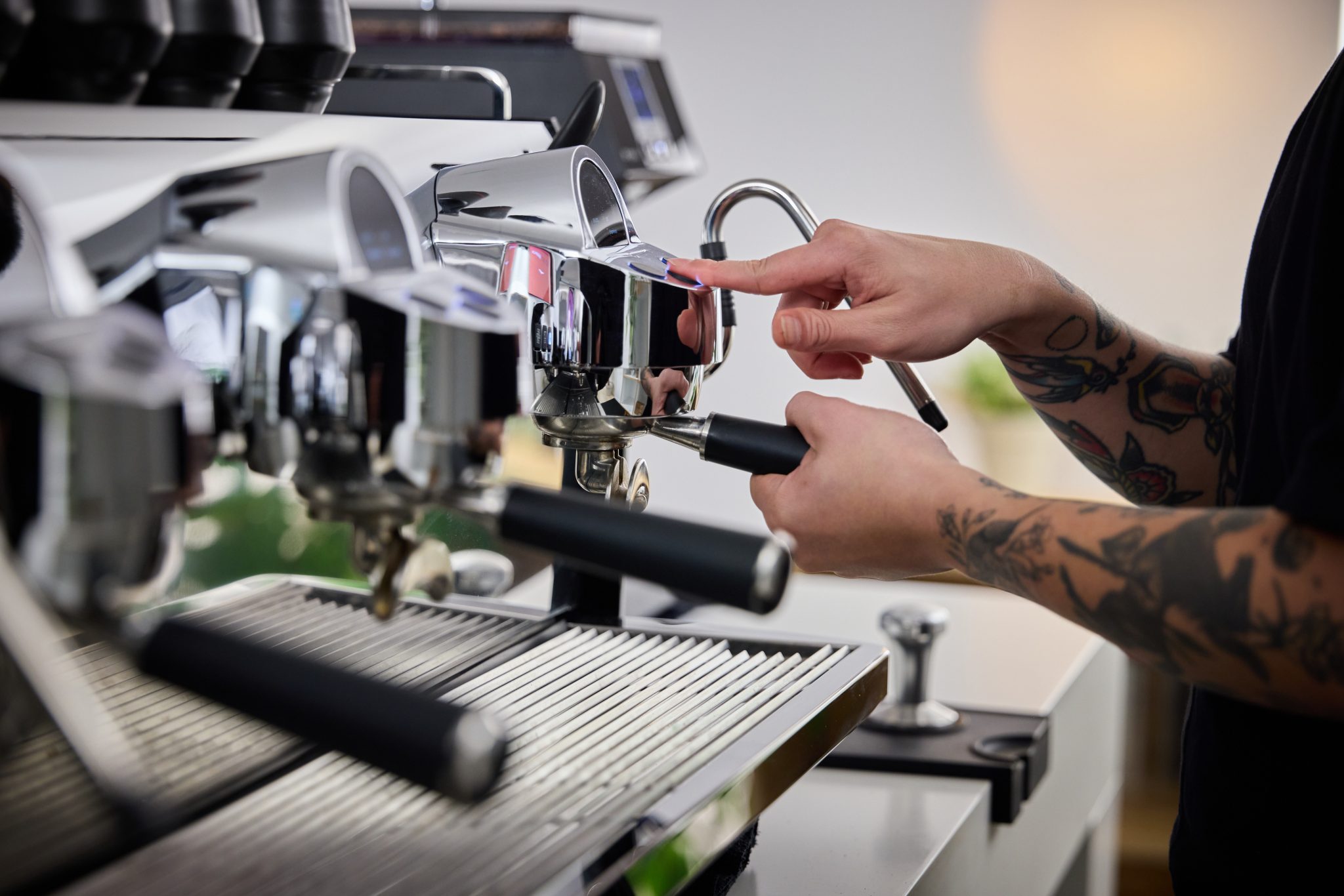

Iconic Espresso machines from Italy
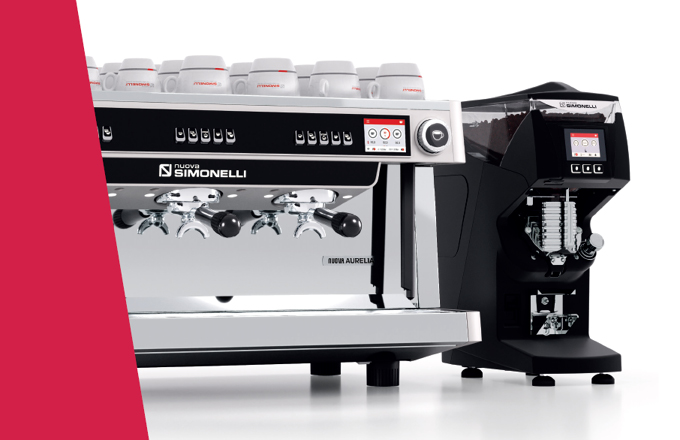

Nuova Simonelli – The coffee machines you can trust
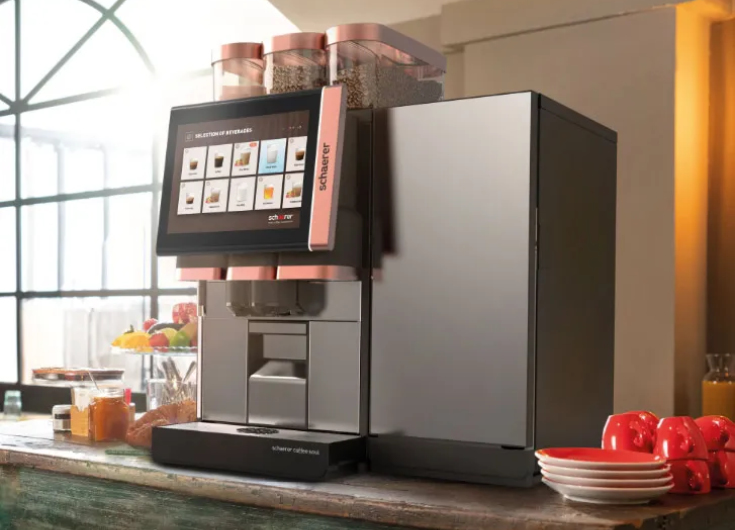
Precision bean to cup coffee machines from Switzerland
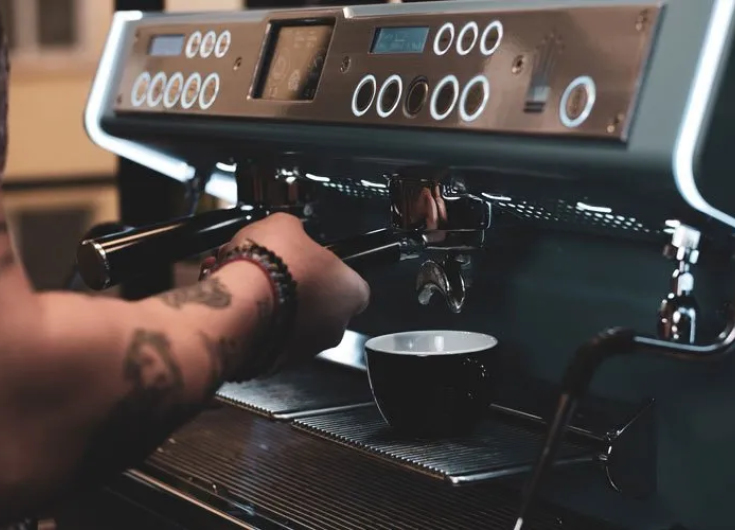
Precision traditional espresso machines from Monaco
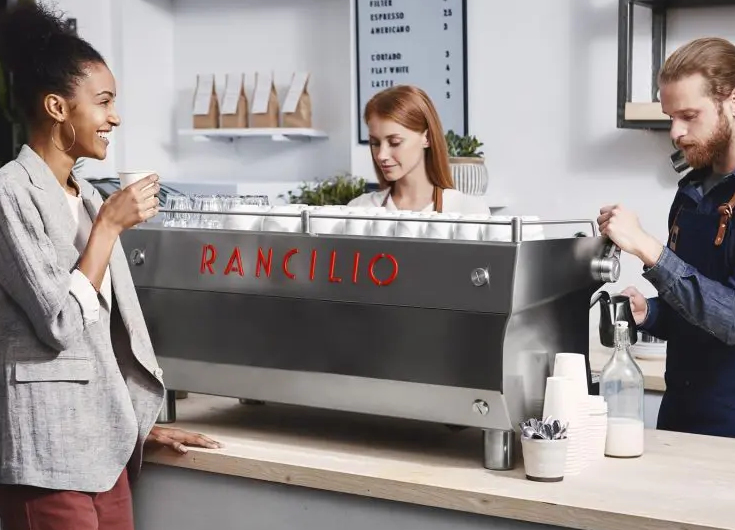

Espresso machines and grinders trusted by the world’s finest coffee roasters
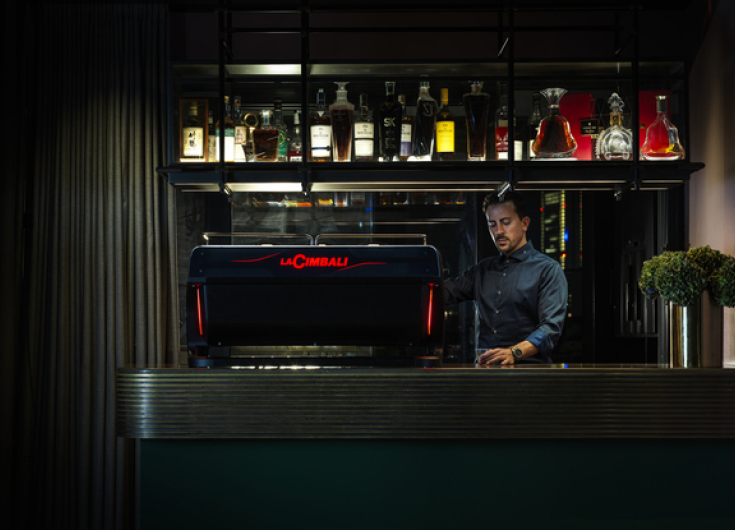
Traditional espresso & fully automatic bean to cup coffee equipment

High quality bulk brewing and hot water dispensers
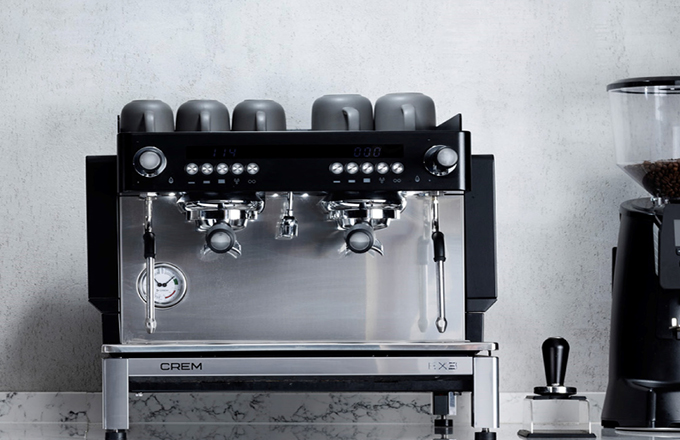

CREM Traditional Espresso Machines

Great Value Bean To Cup Coffee Machines


Superior Osmosis Water Filtration, Pure Water Anywhere