Traditional Espresso vs Bean-to-Cup: Which Is Right for Your Business?
Choosing between a traditional espresso machine and a bean-to-cup coffee machine is one of the biggest decisions when planning a commercial coffee setup.
Both can produce excellent coffee, but they suit different businesses, service styles and teams. A traditional espresso machine is ideal when you want theatre, craft and a premium barista-led experience. A bean-to-cup machine is often the better choice when you need speed, consistency, self-service and simpler operation.
This guide compares traditional espresso vs bean-to-cup to help you decide which is the best coffee machine for your business.
What is a traditional espresso machine?
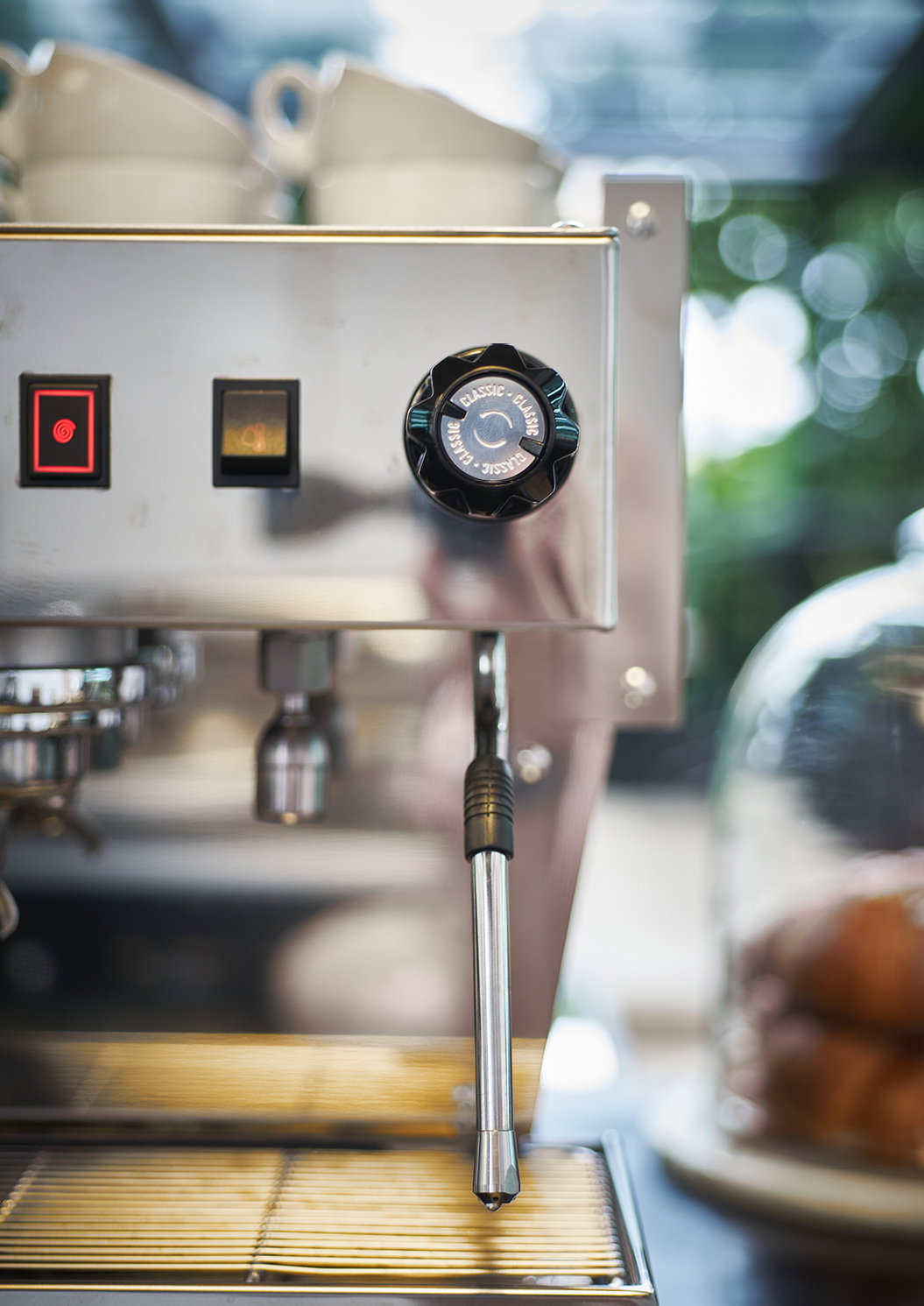
A traditional espresso machine is the classic barista-style coffee machine found in cafés, restaurants, hotels and premium hospitality venues.
It uses freshly ground coffee, controlled extraction and manually steamed milk to create espresso-based drinks such as cappuccinos, lattes, flat whites, americanos and macchiatos.
For businesses that want to make coffee part of the customer experience, a commercial espresso machine can be a strong choice.
Traditional espresso is best for businesses that want:
- A premium coffee experience
- Skilled barista service
- More control over drink quality
- Greater theatre and customer engagement
- A wider speciality coffee menu
- A more artisan or hospitality-led feel
Traditional espresso machines are particularly well suited to cafés, coffee shops, restaurants, hotels, bars, delis and premium foodservice venues.
What is a bean-to-cup coffee machine?
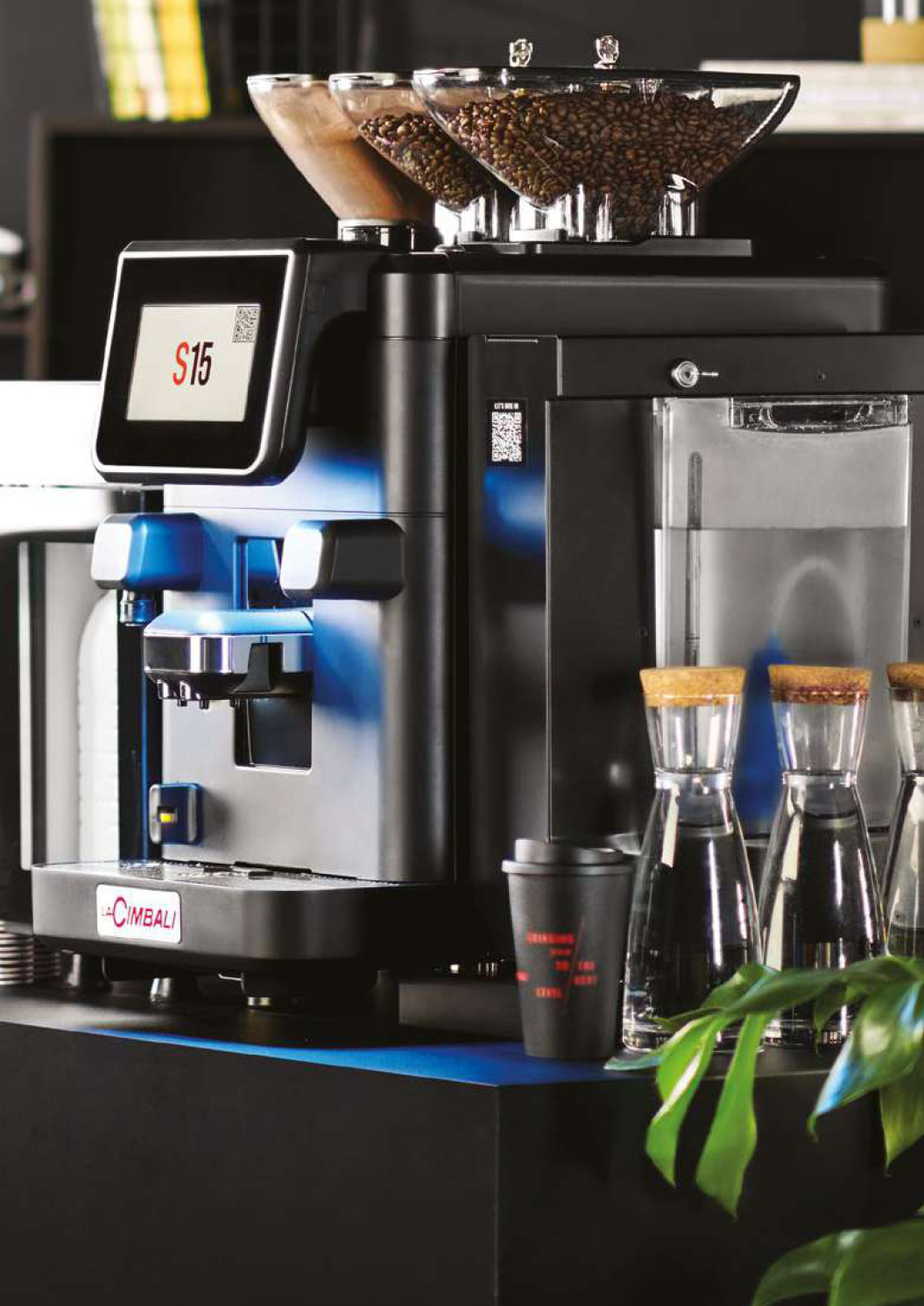
A bean-to-cup coffee machine automates the coffee-making process. It grinds the beans, brews the coffee and, depending on the model, prepares milk-based drinks at the touch of a button.
A commercial bean-to-cup machine is designed for businesses that need reliable, consistent coffee without requiring every member of staff to be trained as a barista.
They are also ideal for self-service environments where customers, employees or guests need to make drinks quickly and easily.
Bean-to-cup is best for businesses that want:
- Simple operation
- Consistent drinks
- Fast service
- Lower staff training requirements
- Self-service coffee
- Multi-site consistency
- Reduced pressure on staff during busy periods
Bean-to-cup coffee machines are often a good fit for offices, hotels, convenience stores, quick-service restaurants, contract catering, education, healthcare and workplace refreshment areas.
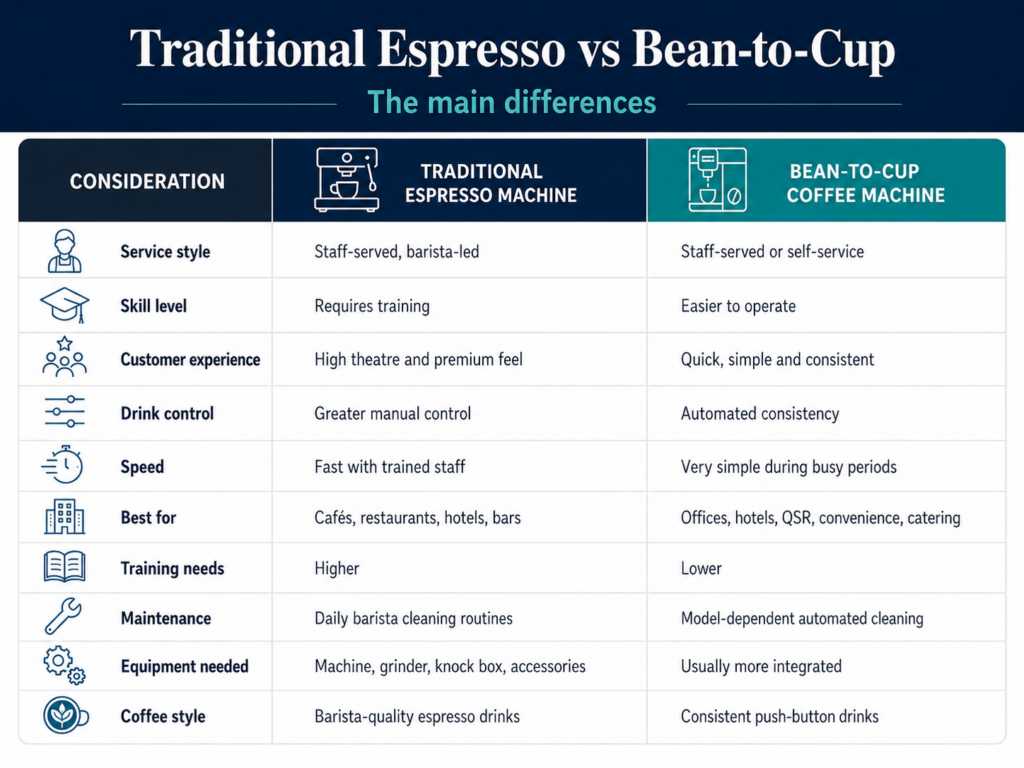
Traditional espresso vs bean-to-cup: the main differences
Which gives the best coffee quality?
Both machine types can produce excellent coffee when specified correctly, installed properly and maintained well.
A traditional espresso machine gives skilled operators more control over the final drink. This can result in outstanding espresso, beautifully textured milk and a more premium customer experience. However, quality depends heavily on training, workflow, grinder setup and staff consistency.
A bean-to-cup machine focuses on repeatability. Once set up correctly, it can produce consistent drinks again and again, even when operated by different staff members or customers. For many businesses, that consistency is more valuable than the added control of a traditional espresso setup.
In simple terms:
A traditional espresso machine is best when coffee craft and experience matter most.
A bean-to-cup machine is best when consistency, speed and simplicity matter most.
Staff training and ease of use
Staff skill level is one of the most important factors when choosing between a bean-to-cup or espresso machine.
Traditional espresso machines need users who understand coffee preparation. Staff will need to know how to grind, dose, tamp, extract espresso, steam milk and clean the machine correctly. With good training, this can help your business serve fantastic coffee and create a more professional experience.
Bean-to-cup machines are much easier to use. Many drinks can be produced at the press of a button, making them ideal where staff turnover is high, training time is limited or coffee needs to be served by non-specialist team members.
If your business has trained baristas, or wants to invest in training, traditional espresso may be the right route. If you need a simple, repeatable process, bean-to-cup may be more suitable.
Self-service or served coffee?
If customers, staff or guests will be making their own drinks, a bean-to-cup machine is usually the better option. It keeps the process simple, quick and easy to understand.
This makes bean-to-cup ideal for:
- Offices and workplaces
- Hotel breakfast areas
- Convenience stores
- Self-service restaurants
- Education sites
- Healthcare environments
- Staff rooms
- Contract catering spaces
If drinks will be prepared and served by trained staff, a traditional espresso machine may be more appropriate. It gives your team the opportunity to create a more premium experience and add value through service, presentation and skill.

Which is better for speed?
The answer depends on your team and your environment.
A trained barista using a traditional espresso machine can work quickly and efficiently, especially with a good grinder and well-planned workflow. This can be ideal for busy cafés and hospitality venues where coffee is a core part of the business.
Bean-to-cup machines are very efficient where simplicity is more important than manual control. They are particularly useful during busy periods where different team members need to produce consistent drinks without specialist training.
For high-footfall locations, the right answer may even be a combination of both. For example, a hotel might use a traditional espresso machine in the bar and a bean-to-cup machine in the breakfast area.
Fresh milk, powdered milk and drink quality
Milk choice is another factor to consider, especially with bean-to-cup machines.
Fresh milk systems can produce a more premium taste and texture, making them suitable for businesses that want a higher-quality drink experience.
Powdered milk systems may be useful where simplicity, storage and lower handling requirements are priorities. They can work well in some self-service or high-volume environments, although they may not deliver the same premium perception as fresh milk.
Traditional espresso machines usually use fresh milk, steamed manually by the operator. This gives trained staff more control over texture and presentation.
Which option is best by business type?
Cafés and coffee shops
Traditional espresso is usually the strongest choice for cafés and coffee shops, especially where coffee is a key part of the customer experience. A good espresso machine, commercial grinder and trained staff can help create a strong, premium coffee offer.
Restaurants and pubs
Both options can work. Traditional espresso suits venues that want a premium after-meal coffee experience. Bean-to-cup may be better where staff need to produce consistent drinks quickly without specialist barista training.
Hotels
Hotels often benefit from a mixed approach. A traditional espresso machine may suit the bar, lounge or restaurant, while bean-to-cup can work well in breakfast areas, meeting spaces and self-service locations.
Offices and workplaces
Bean-to-cup is usually the most practical choice. It gives staff and visitors access to fresh coffee throughout the day with simple operation and consistent results.
Convenience stores and quick-service sites
Bean-to-cup is often the best fit because it supports quick, self-service coffee with minimal staff involvement.
Contract catering
The right option depends on the site. Bean-to-cup may suit workplace or education settings, while traditional espresso may be better for premium hospitality areas.
Which coffee machine is right for your business?
There is no single best coffee machine for every business. The right choice depends on your customers, staff, service style, space and expected daily volume.
Choose a traditional espresso machine if you want:
- A premium, barista-led coffee experience
- Greater control over drink quality
- Strong presentation and theatre
- A skilled service style
- A more specialist coffee menu
Choose a bean-to-cup coffee machine if you want:
- Simple operation
- Consistent drinks
- Lower training requirements
- Self-service capability
- Speed and convenience
- Reliable coffee across different users or sites
In some cases, the best solution may be to use both. Many hospitality businesses combine traditional espresso machines, bean-to-cup systems and bulk brew coffee equipment across different parts of the same site.
Speak to Barista Tech for expert coffee machine advice
If you are comparing a commercial espresso machine vs an automatic coffee machine, Barista Tech can help you choose the right setup for your business.
We supply professional coffee machines, bean-to-cup solutions, traditional espresso machines, grinders, water filtration, coffee beans and aftercare support for businesses across the UK.
Whether you are opening a new site, upgrading your current coffee offer or planning a multi-site rollout, we can help you find the best coffee machine for your business.
Speak to Barista Tech today for help choosing between traditional espresso and bean-to-cup coffee equipment. Call 01473 350046, email enquiries@baristatech.co.uk or complete our contact form